
Live weekend course for students aged 14–16

Your child is being asked to choose a stream while the meaning of each stream is changing.

Before You Decide is an 8 session live course across 4 weekends, helping students understand how work, technology and higher education are changing before choosing subjects, careers or where to study.

Starts 1st Aug4 Weekends · 8 Sessions12 PM ISTLive Online
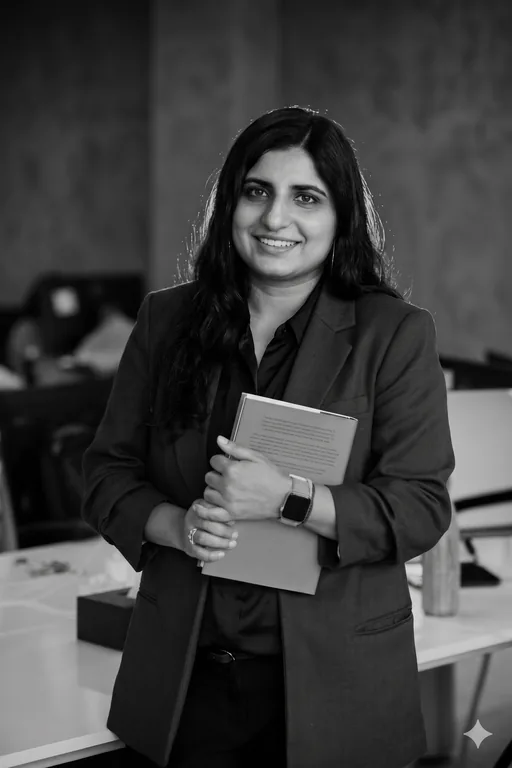
Shikha Tomar, founder of thinkO and course facilitator
Shikha Tomar
Founder, thinkO · Course facilitator
8 SessionsAcross 4 weekends
4 WeekendsSaturday & Sunday
1st AugCourse begins
12 PM ISTEvery session
60 MinutesEach session
Live Online50 seats per batch
The decision families are already discussing

A school form may ask for one answer. The student is working with fragments.

By Class 9 or 10, stream choices begin to carry more weight. Coaching decisions start. Relatives offer examples from careers they know. YouTube supplies confident answers from people the family has never met.

The student has opinions, fears and incomplete information. The parent has experience from a labour market that has already changed. Conversations about science, commerce, humanities or studying abroad can become arguments before the family has agreed on the facts.

Before You Decide gives students eight structured conversations before they choose.

What the course will not do

  • It will not prescribe a stream, career or country.
  • It will not use a personality test to label the student.
  • It will not promise a “safe” career in an uncertain future.

What it will do

  • Give students a common set of facts and questions.
  • Help them examine assumptions before defending a preference.
  • Give framework to a student to understand what resonates with them.
Weekend 1 is open for registration. The World in 2032 · 1–2 August · 12 PM IST · ₹499 for both live sessions.
The course arc

Eight sessions across four weekends - each weekend able to stand alone.

Weekend 1 examines the forces reshaping every career by 2032. The next two weekends look inside science, engineering, commerce and humanities. The final weekend applies the same method to studying in India or abroad.

Weekend 1The World in 2032What kind of world will you graduate into, and how do you stay relevant in it?
Weekend 2Science & Technology in 2032What is changing inside science and engineering?
Weekend 3Commerce & Humanities in 2032What is changing inside commerce and humanities?
Weekend 4India or Abroad?Does studying abroad still make sense, and what does each country stand for?
Weekend 1

The World in 2032

Live · 1–2 Aug
01
Session 1

What Kind of World Will I Graduate Into by 2032?

The forces shaping your future are already in motion. Using data and research, this session explores how AI, geopolitics, climate change and demographic shifts will influence the world you enter and the choices you make today.

  • What forces will shape education, careers and everyday life by 2032?
  • Which changes should influence the subjects and skills I choose now?
1st August · 12 PM ISTBook this weekend →
02
Session 2

How Do I Stay Relevant in a World That Won’t Stop Changing?

No one can predict every future job, but students can learn to adapt. This session explores the skills that will remain valuable and how to stay informed without feeling overwhelmed.

  • What does the data tell us about the future of jobs?
  • How can I separate useful signals from hype and continue learning independently?
2nd August · 12 PM ISTBook this weekend →
Weekend 2

Science & Technology in 2032

Coming soon · 8–9 Aug
03
Session 3

Will Science & Medicine Still Matter in 2032? (And What Will They Look Like?)

AI will not make science less important, it may make it more ambitious. This session explores the unanswered questions scientists and doctors must still solve, from disease and longevity to the brain, climate and space.

  • What major scientific and medical challenges will remain in 2032?
  • How will AI reshape the work of scientists, researchers and healthcare professionals?
8th August · 12 PM ISTOpens soon
04
Session 4

If AI Can Code, What’s Left for Engineers to Do?

AI can generate code, designs and technical solutions but engineering goes beyond execution. This session explores how roles are changing and why problem-framing, systems thinking, and creativity will matter more.

  • Which engineering areas will AI automate, and which will still need humans?
  • What should future engineers learn beyond coding and formulas?
9th August · 12 PM ISTOpens soon
Weekend 3

Commerce & Humanities in 2032

Coming soon · 15–16 Aug
05
Session 5

Business, Money & Commerce in 2032: Are These Skills Becoming Irrelevant?

As accounting becomes automated, commerce is not disappearing, it is evolving. This session explores how AI is reshaping finance, business and economics, which skills will lose value, and why understanding money will matter even more.

  • What problems will commerce, economics, finance and actuarial science solve by 2032?
  • Which business skills will matter more as routine analysis is automated?
15th August · 12 PM ISTOpens soon
06
Session 6

Could Humanities Be the Smartest Choice in the Age of AI?

Humanities is not becoming irrelevant, it is becoming more valuable. This session explores where graduates are working, which skills are in demand, and why understanding people matters even more as AI handles more technical tasks.

  • Why will human judgement, ethics and communication matter more in the age of AI?
  • What careers can humanities lead to in a technology-driven world?
16th August · 12 PM ISTOpens soon
Weekend 4

India or Abroad?

Coming soon · 22–23 Aug
07
Session 7

Does Studying Abroad Still Make Sense in 2026? (And If So, Where?)

Studying abroad is no longer an obvious choice. Using real data, this session compares global opportunities with staying in India, examines how geopolitics and economics are changing the equation, and helps students decide for themselves.

  • How has studying abroad changed since your parents’ time and what does that mean for your decision?
  • What are the real pros and cons for your stream, goals and situation?
22nd August · 12 PM ISTOpens soon
08
Session 8

What Do Different Countries Actually Stand For?

Studying abroad means choosing more than a university. This session examines the US, Canada, Australia, Germany and emerging destinations and how their changing domestic realities are reshaping opportunities.

  • What are leading study destinations best at and what are their trade-offs?
  • Which country best fits my interests, budget and future goals?
23rd August · 12 PM ISTOpens soon
Start with the weekend that is live now. Register for one weekend at a time. The rest open as they are announced.
Inside live session

Students do more than listen to an answer.

Every session uses the same structure so students know how to examine a difficult question rather than wait for Shikha to settle it for them.

1

Start with a position

Students respond before seeing the evidence. This makes their starting assumption visible.

2

Inspect the evidence

Shikha introduces a case, chart, research finding or policy change and explains what it can and cannot prove.

3

Test the argument

Students compare explanations, identify missing information and discuss trade-offs with the cohort.

4

Record what changed

Each student writes down one revised assumption, one unresolved question and the next thing to investigate.

Sample: The World in 2032
What Kind of World Will I Graduate Into by 2032?

Students begin by imagining their lives in 2032. Using the OCEANS framework, data, polls and role-play, they explore the deeper forces shaping their future.

They imagine
Where they might live, study and work — and what concerns them most about the future.
They learn
How visible headlines differ from the deeper currents reshaping education, careers and everyday life.
They examine
Which changes are real, which are hype, and where disruption may also create new opportunities.
They leave with
A personal 2032 Forces Map: three changes to track, two opportunities to explore and one question to investigate.
What remains after the sessions

A record of the student’s thinking, not a certificate of attendance.

Every student receives a Before You Decide notebook. Each session adds one set of decision notes: the student’s starting view, the evidence examined, what changed, what did not and what still needs to be verified.

After the sixth session, the student completes a summary for the next family conversation. Parents receive a short guide that helps them discuss the notes without demanding an immediate final answer.

Decision NotesSession 03
My starting viewEngineering means...
The evidence we examinedTasks AI can complete and decisions it cannot own.
What changedI was treating coding and engineering as the same thing.
What I still need to verifyWhich engineering fields match the problems I enjoy.
Dates and registration

Start with the questions that matter to you now.

Each weekend includes two connected live sessions. Register for one weekend at a time; the remaining weekends will open as they are announced.

One Weekend Pass

Both live sessions of a weekend, one price.

Choose the weekend you want to attend. Each weekend stands on its own and explores one important area of your future through research, real-world examples and interactive activities.

₹499
Includes both live sessions
Weekend 1Live now

The World in 2032

  • What Kind of World Will I Graduate Into by 2032?
  • How Do I Stay Relevant in a World That Won’t Stop Changing?
1–2 August · 12 PM IST Book now
Weekend 2Coming soon

Science & Technology in 2032

  • Will Science & Medicine Still Matter in 2032? (And What Will They Look Like?)
  • If AI Can Code, What’s Left for Engineers to Do?
8–9 August · 12 PM IST Book now
Weekend 3Coming soon

Commerce & Humanities in 2032

  • Business, Money & Commerce in 2032: Are These Skills Becoming Irrelevant?
  • Could Humanities Be the Smartest Choice in the Age of AI?
15–16 August · 12 PM IST Book now
Weekend 4Coming soon

India or Abroad?

  • Does Studying Abroad Still Make Sense in 2026? (And If So, Where?)
  • What Do Different Countries Actually Stand For?
22–23 August · 12 PM IST Book now
Portrait of Shikha Tomar, founder of thinkO
Who will lead the room

Shikha Tomar, Course Facilitator

“Do not choose your future from a limited map. First understand the world, then decide where you belong.”

Shikha Tomar is an IIM Calcutta graduate, economist and public policy professional with over 14 years of leadership experience across technology, finance, education and consumer businesses. Her career has taken her across industries, roles and complex challenges, from building new products to leading large teams and scaling businesses at Simpl, HDFC Life, Manipal Global Education and OneDirect. Her journey reflects a powerful lesson for young people: careers do not have to follow a straight line. Curiosity, adaptability and the courage to keep learning can open possibilities you may not yet be able to see

Register for Weekend 1
Who the course fits

Useful for students who are beginning to choose, including those who already have a preference.

This course may fit

  • Students aged 14–16 considering subjects or future study.
  • Students interested in more than one path.
  • Students with a current preference who want to test it.
  • Families beginning conversations about India and overseas education.
  • Teenagers willing to participate in live discussion and short written reflection.

This course will not replace

  • Personalised stream or career counselling.
  • Psychometric assessment.
  • University shortlisting or admissions consulting.
  • Individual advice based on marks, finances or family circumstances.
  • A guaranteed career or education outcome.
Sounds like the right fit? Seats per batch are limited so students can take part, not only listen.